
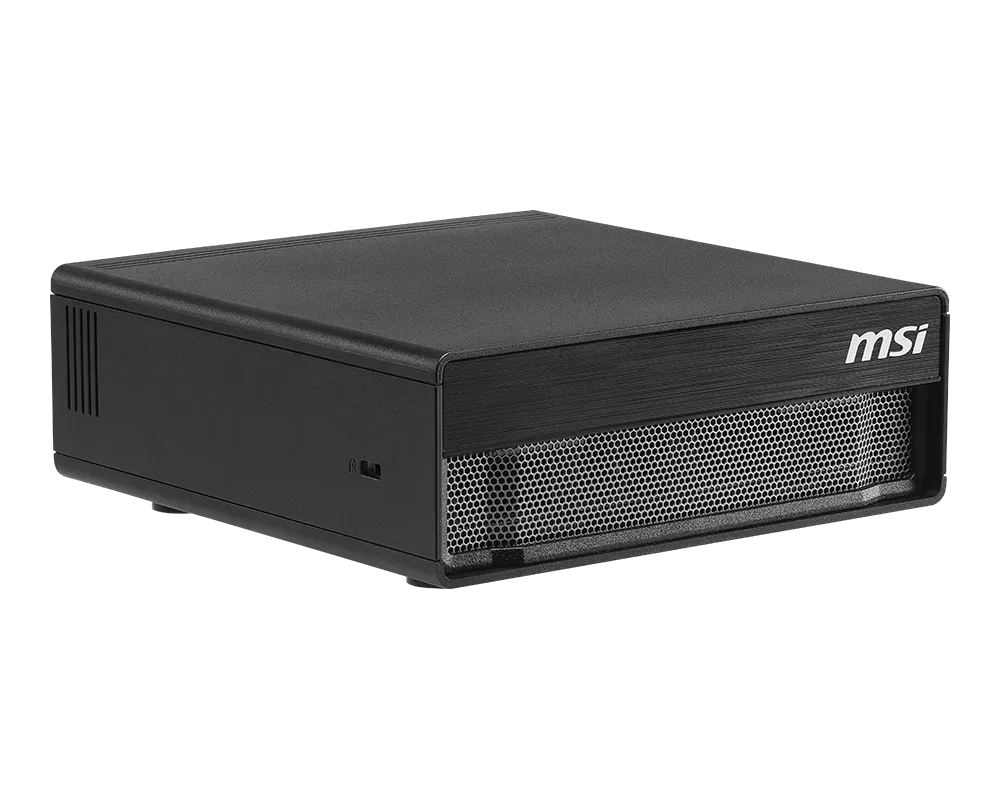




MS-CF03: Powering High-Precision Blood Analyzers for Smart Diagnostics, China

By integrating the MSI MS-CF03, modern blood analyzers perfectly balance powerful diagnostics with compact design to drive the next generation of smart medical technology.
Overview
In the field of In Vitro Diagnostics (IVD), the demand for high-throughput, automated, and high-precision testing is rapidly increasing. Next-generation Automatic Blood Analyzers combine fluidics, optics, and complex algorithms to provide rapid and accurate hematology results. To manage synchronized mechanical control and real-time data processing for cell counting and hemoglobin measurement, the MSI MS-CF03 3.5” Single Board Computer was selected as the system’s core. This industrial-grade board enables laboratory-grade performance within a compact, clinical-friendly form factor.
The Application Challenges
- Precision Motion Control: High-end analyzers require synchronized control over multiple stepper motors and pumps for precise sample aspiration, dilution, and mixing.
- Real-time Signal Processing: The system must process high-frequency signals from impedance and optical sensors to categorize blood cells in seconds.
- 24/7 Clinical Reliability: Medical equipment requires zero-downtime stability and high resistance to electromagnetic interference (EMI) in hospital settings.
- Compact Benchtop Design: To save valuable laboratory space, the computing unit must be small (3.5" SBC) yet powerful enough to drive an all-in-one touch-interface system.
The Solution: MSI MS-CF03 3.5” Single Board Computer
The MS-CF03, featuring the Intel® Alder Lake-N platform, provides the ideal computational foundation for modern diagnostic equipment:
- Efficient Multitasking: Powered by Intel® Core™ i3-N305 / Processor N97, it handles the User Interface (UI), database management, and diagnostic algorithms simultaneously without latency.
- Integrated Display & Interface: With support for eDP/LVDS and HDMI, the MS-CF03 directly drives high-resolution onboard touch panels, allowing technicians to view detailed histograms and scattergrams.
- Industrial-Grade Durability: The fanless design prevents dust accumulation, while 9~36V wide voltage input ensures stability against power fluctuations in clinical environments.
- Seamless Medical Networking: Dual 2.5GbE LAN ensures high-speed synchronization with Hospital Information Systems (HIS) and Laboratory Information Systems (LIS).
Product Features
Application Benefits
- Increased Diagnostic Throughput: High-speed processing allows the analyzer to complete a Full Blood Count (FBC) in less than 60 seconds.
- Enhanced Result Accuracy: Robust computing power enables more sophisticated error-correction and calibration algorithms.
- Reduced Maintenance Costs: The industrial-grade longevity and fanless design significantly lower the Total Cost of Ownership (TCO) for healthcare providers.
Conclusion
By integrating the MSI MS-CF03, modern blood analyzers achieve a perfect balance between high-performance diagnostics and compact industrial design. The board’s ability to process complex sensor data while maintaining a small, fanless footprint allows manufacturers to deliver efficient and reliable solutions to the global healthcare market. This application demonstrates MSI IPC’s commitment to providing the "intelligent heart" for the next generation of smart medical technology.