
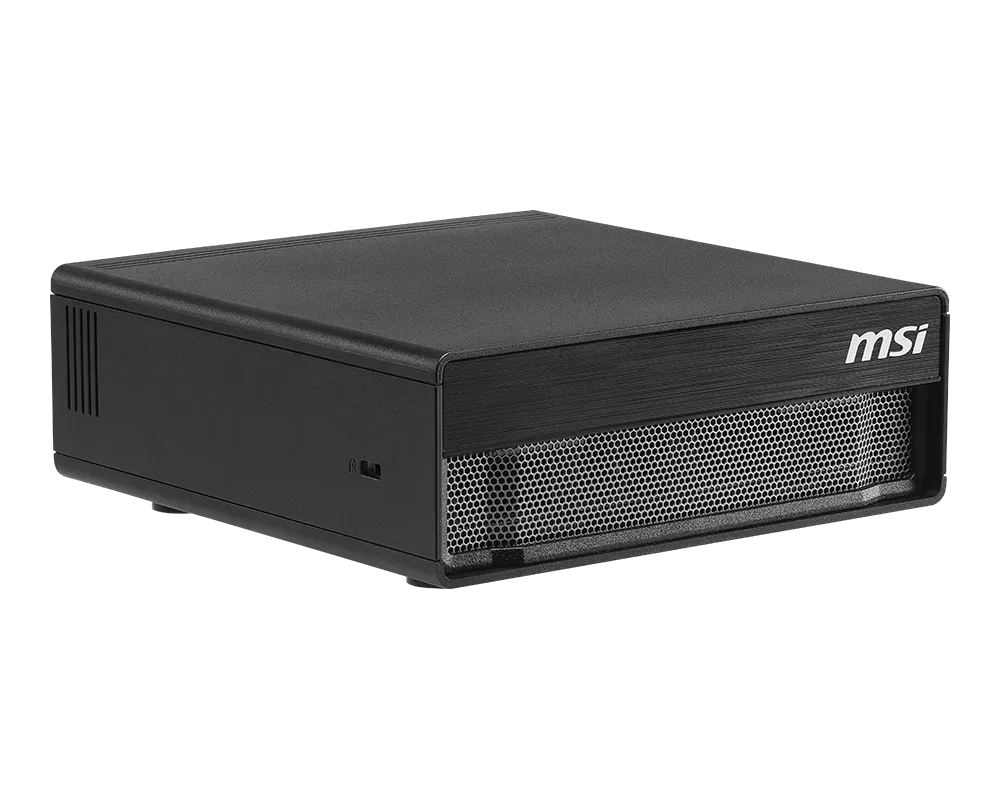




Enabling the Next-Generation Vector Signal Analyzer with MSI MS-CF02 H610 Mini-ITX Board

To meet increasing RF test demands, a leading instrument manufacturer developed a compact high performance Vector Signal Analyzer that advances beyond its legacy x86 platform.
Background
To meet growing demands for higher bandwidth, lower noise, and better modularity in RF signal testing, a leading instrument manufacturer set out to develop a next-generation Vector Signal Analyzer (VSA). The goal was to offer a compact, high-performance analyzer capable of advanced signal analysis, remote monitoring, and long-term deployment in both lab and production environments.
This development was an evolution from the company’s previous generation VSA, which was based on a legacy x86 micro-ATX platform using 6th/7th Gen Intel® Core™ processors. The older platform had limitations in scalability, power efficiency, and I/O modernization.
Challenge
- The previous generation VSA used a traditional micro ATX industrial motherboard with higher thermal output and limited I/O.
- Legacy I/O interfaces, large footprint, and short CPU lifecycle made it unsuitable for long-term embedded use.
- A modern VSA design required:
- Smaller footprint for integration into compact enclosures
- Support for high-speed data acquisition and processing
- Future-proof I/O interfaces and storage options
- Industrial-grade reliability with fanless operation support
Solution: MSI MS-CF02 H610 Embedded Board
To support the next-generation architecture, the engineering team selected the MS-CF02 H610, a Mini-ITX industrial motherboard by MSI designed for embedded and edge computing applications.
Key Reasons for Selection:
System Use Case
In the new VSA system:
- The RF front-end handles signal capture and I/Q demodulation.
- The MS-CF02 serves as the main system controller, executing FFT, spectrum analysis, EVM calculation, and visualization.
- Data is stored on M.2 SSDs and displayed via HDMI in a responsive GUI.
- COM ports and LAN are used for synchronization with external test equipment and automation systems.
Outcome
- Performance boost: Signal processing times improved by over 40% vs. previous generation.
- Reduced size: Mini-ITX platform enabled a 30% smaller mechanical design.
- Power efficiency: Passive cooling design enabled in fanless configurations.
- Scalability: Modular architecture allows future upgrades (e.g. 5G modules, edge AI coprocessors).
- Ease of integration: Pre-tested Linux and Windows 10/11 compatibility streamlined development.
Conclusion
By adopting the MSI MS-CF02 H610, the development team successfully transitioned from a legacy platform to a compact, modern embedded solution—laying the foundation for a next-generation VSA that is smaller, faster, more reliable, and future-ready. The MS-CF02 enables test and measurement equipment manufacturers to scale their RF solutions while simplifying thermal design, integration, and long-term product support.