


MS-1A91 Industrial Panel PC Enables Real-Time Press-Fit Monitoring in Automotive Manufacturing
An European manufacturer of automotive measurement systems deployed the MSI MS-1A91 Industrial Panel PC as an HMI and process monitoring terminal at its press-fit and assembly workstations.
Overview
In automotive manufacturing, press-fitting components such as bearings, bushings, and powertrain parts require precise control of force and displacement.
The MSI MS-1A91 10.1" Fanless HMI Panel PC is deployed at the assembly workstation as a standalone monitoring dashboard. It displays real-time force-displacement curves, Pass/Fail (OK/NG) results, and process alerts, helping operators quickly identify abnormal press-fit conditions.
Powered by an Intel® Alder Lake N Series processor, the MS-1A91 provides the computing performance and industrial design required for continuous HMI operation on the factory floor.
Application Challenges
Automotive press-fit workstations require reliable monitoring throughout continuous production. Key challenges include:
- Fast Quality Response: Operators need immediate visibility of abnormal press-fit results.
- Harsh Factory Conditions: Dust, oil mist, and liquid splashes can affect standard computing equipment.
- Clear Process Visibility: Force-displacement curves and quality results must be easy to read on the production floor.
- Stable Operation: Power fluctuations can interrupt monitoring and affect production data.
- Existing Machine Integration: The HMI must connect with PLCs, controllers, and measurement systems already installed on the line.
Application Benefits
- Real-Time Quality Verification: Displays force-displacement curves and Pass/Fail results directly at the workstation.
- Industrial Durability: The IP65-rated front panel helps protect against dust and liquid exposure in factory environments.
- Faster Exception Response: Immediate alerts allow technicians to react quickly to abnormal press conditions.
- Power Protection: A built-in backup battery provides up to 1 hour of operation during power interruptions, helping preserve production data and system stability.
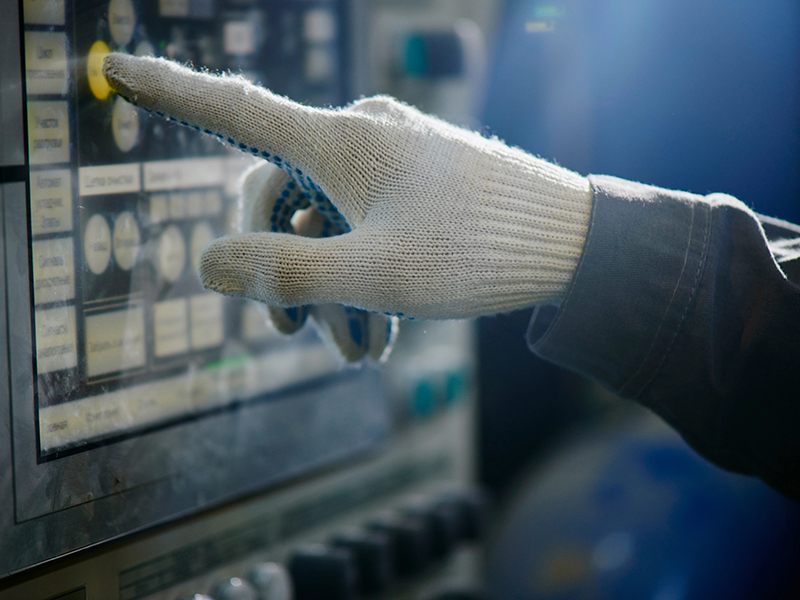
- Reliable HMI Operation: The 10.1" 500-nit display and 5-wire resistive touch support visibility and glove-friendly operation on the factory floor.
Features and Benefits
Conclusion
The MSI MS-1A91 Industrial HMI Panel PC provides automotive manufacturers with a reliable platform for real-time press-fit monitoring. By displaying force-displacement curves, Pass/Fail results, and process alerts directly at the workstation, it helps operators respond faster to abnormalities, improve quality visibility, and strengthen production traceability.
Product Information:
https://ipc.msi.com/product_detail/Industrial-Panel-PC/Front-IP65/MS-1A91
FAQ
Q1: What makes an Industrial Panel PC suitable for an automotive assembly line?
An Industrial Panel PC is suitable for automotive assembly when it can operate reliably around dust, oil mist, and daily production activity. A fanless design and IP65-rated front panel help protect the system from contaminants while reducing maintenance on the factory floor.
Q2: Can operators use an Industrial Panel PC touchscreen while wearing work gloves?
Yes, if the touchscreen supports pressure-based input. A 5-wire resistive touchscreen can be operated with work gloves, making it practical for production environments where operators cannot frequently remove protective gloves. Actual performance should be verified with the gloves used on-site.
Q3: Is a 500-nit display bright enough for factory-floor monitoring?
Yes, a 500-nit display is suitable for most indoor factory environments. It provides clear visibility of production data such as force-displacement curves, Pass/Fail results, and warning messages, helping operators understand process status quickly.
Q4: Can real-time press-fit monitoring be added to an existing production machine?
Yes, if the existing machine can provide production data through standard communication interfaces. An Industrial Panel PC can connect with machine controllers, measurement devices, and factory networks to add real-time visualization, quality results, and alerts without necessarily replacing the existing press-fit machine.
Q5: What should manufacturers look for when choosing an Industrial Panel PC for automotive assembly?
Manufacturers should look for reliable operation, clear display visibility, glove-friendly touch, industrial protection, flexible connectivity, and easy installation. The selected system should also match the factory’s power supply, operating environment, available installation space, and existing equipment.