




Technical Brief: Hybrid Agentic AI Architecture via Nemotron 3.5 Lightning and NeMo Switchyard
1. System Overview: The "Systems of Models" Paradigm
Modern agentic AI requires a shift from monolithic model deployment to a "System of Models" architecture. In this framework, agents execute complex workflows involving perceiving, planning, acting, evaluating, and repeating. No single foundation model excels at all steps; instead, efficiency and accuracy are maximized by routing specific tasks to specialized models and reserving frontier-level models only for high-complexity reasoning.
Key Architectural Benefits:
- Higher Accuracy: Utilization of the optimal model capabilities for each specific workflow step.
- Better Efficiency: Smaller, specialized models handle high-volume tasks; frontier models address complexity.
- Lower Latency: Reduced response times across multi-step agentic workflows.
- Security & Data Sovereignty: Configurable routing rules can strictly pin sensitive data (e.g., customer information, financial figures, or proprietary source code)
2. NVIDIA Nemotron 3.5 Lightning
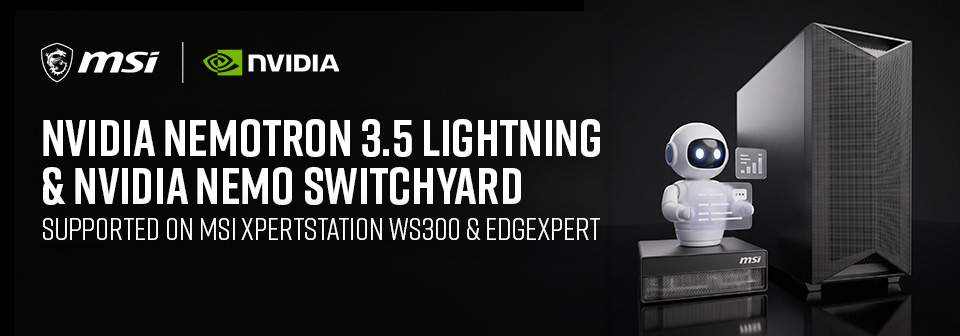
NVIDIA Nemotron 3.5 Lightning serves as the efficient, localized inference engine within this architecture, designed to handle high-volume agent tasks without cloud dependency.
Model Architecture & Capabilities:
- Architecture: Mixture-of-Experts (MoE) with 30 billion total parameters and only 3 billion active parameters per token.
- Lineage: Distilled from NVIDIA’s frontier Nemotron 3 Ultra model to retain agentic capability in a smaller footprint.
- Optimization: Engineered for popular agent harnesses; provides leading accuracy in coding, tool calling, instruction following, and multi-turn workflows.
- Customizability: Fully open and customizable, allowing organizations to post-train the model on proprietary data for specialized tasks.
Hardware Deployment Targets:
Designed for local deployment to ensure data sovereignty and low-latency inference:
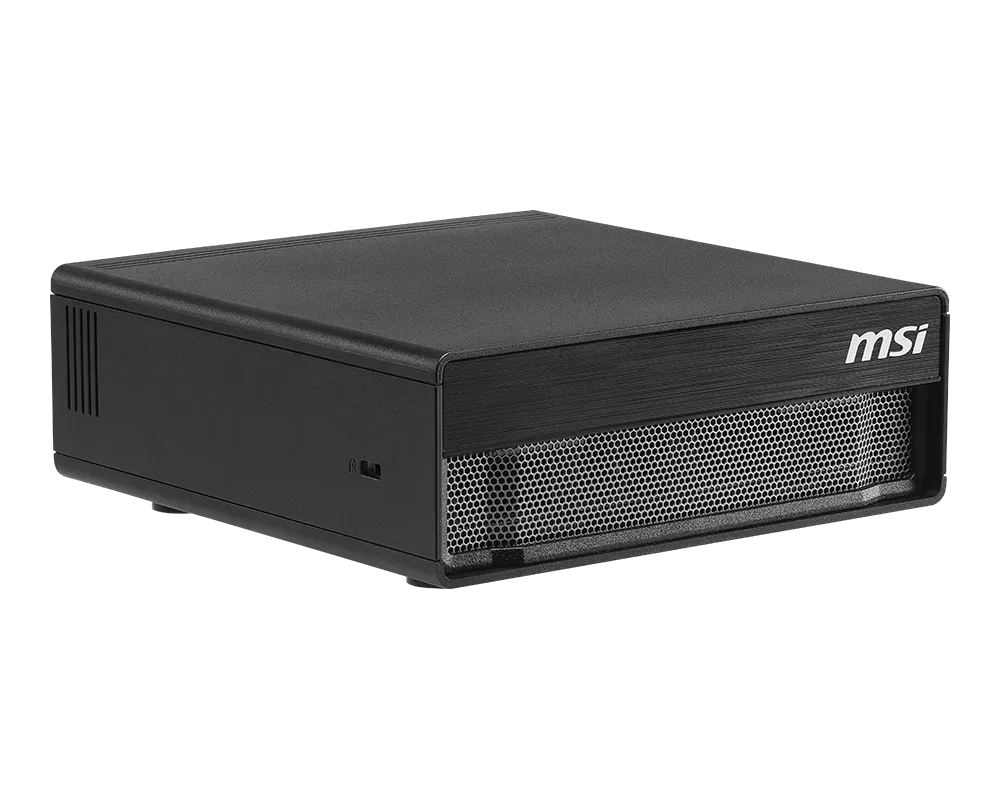
- MSI EdgeXpert based on NVIDIA DGX Spark (GB10)
- MSI XpertStation WS300 based on NVIDIA DGX Station (GB300)
- Scalable to NVIDIA DGX SuperPOD (H100/B200) for hybrid setups.
3. NVIDIA NeMo Switchyard
NVIDIA NeMo Switchyard is the orchestration layer that enables a "System of Models" architecture by automating traffic distribution.
Core Functionality:
- Automatic Routing: Acts as an open-source routing library that selects the best available model for each step of an agent workflow from a user-defined pool (mix of closed and open models).
- Zero-Configuration Start: Includes built-in starter routing algorithms that work out-of-the-box with no training data, fine-tuning, or complex configuration required.
- Autonomous Improvement: The routing model gets smarter over time; usage data from agent runs automatically improves routing decisions without manual retraining.
Integration Modes:
Available via GitHub Early Access and compatible with various integration points:
- Standalone server
- Lightweight Python library
- Embedded natively inside an agent harness (via LLM gateways or ISPs).
4. Operational Workflow Logic
The integration of Nemotron 3.5 Lightning and NeMo Switchyard follows a signal-driven routing loop:
- Observation: The agent encounters a task step (e.g., planning, coding, verifying).
- Evaluation: NeMo Switchyard evaluates the query context against available model strengths.
- Routing Decision:
- High-Volume/Specialized Tasks: Routed to local Nemotron 3.5 Lightning for efficiency and privacy (e.g., routine classification, data extraction).
- Complex Reasoning Tasks: Routed to Frontier Models when specialized capability is exceeded.
- Execution & Feedback: The selected model processes the request. Performance telemetry feeds back into Switchyard to refine future routing decisions.
5. Industry Use Cases
This hybrid architecture targets specific vertical workflows where "always-on" agents require consistent, reliable inference:
- Personal Agents: Managing email, calendar, projects, and bookings locally on DGX Spark/RTX Spark.
- Software Development: PR summarization, code classification, and test triage.
- Financial Services: Data extraction from documents, policy rule checking, risk signal monitoring, and summary generation.
- Cybersecurity: Alert enrichment, incident classification, log querying, control validation, and finding preparation.
- Telecom & Healthcare: Triage network alarms/answer billing queries (Telecom); automate scheduling/billing/standardized comms (Healthcare Admin).
6. Performance Outcomes & Evidence
Production deployments utilizing this routing architecture have demonstrated significant cost reductions and efficiency gains:
- Harvey Legal: Reduced model inference costs by >10x by pairing Switchyard with post-trained Nemotron models tailored for their legal domain.
- Applied Compute: Achieved 25% reduction in overall model costs while maintaining frontier-level accuracy on SWE-bench Verified benchmarks through intelligent routing.
This architecture moves AI adoption from "procurement of GPU clusters" to the deployment of modular, optimized software systems capable of self-optimization over time.